
Anime Shop Simulator How to Make Money
A demo-era profit playbook: buffer, licenses, sold SKUs, sealed packs, and markups that do not empty the aisle.
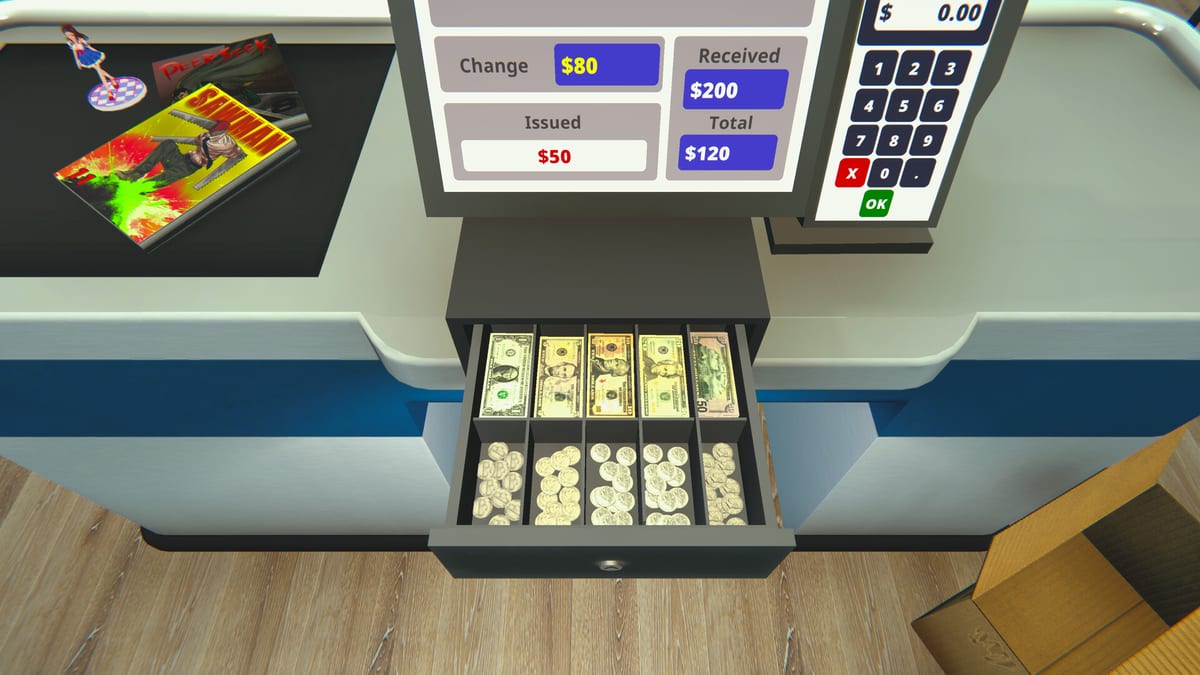
Anime Shop Simulator pays you for restocking holes, not for looking busy. The full Windows game is still upcoming on 11 September 2026. Everything here is for the free Steam demo (app 3444070) that has been playable since 19 February 2026, plus public playtests that used the same till. Developer One More Time (with publisher Polnoch) has not published promo codes. Cash comes from shelves, scans, and a buffer you refuse to empty.
If you have not named the shop yet, start with getting started. This page is the money loop after that first hour: what to license, what to reorder, when to rip a pack, and when a markup is just a quiet aisle.
Keep a cash buffer, always
Playtests often start you near nine hundred dollars. That is demo-era, not a 1.0 promise. Shipping sits on top of product cost. A booster carton plus freight can swallow a hundred and forty dollars in one click. Three loose packs have eaten fifty. If you spend the last note on a vanity license, you cannot refill the manga that was actually printing money.
A useful floor: enough cash to reorder your engine SKU once, including shipping, without touching the next license. For most early shops that engine is manga. Hold a few hundred unspent if you are still on start cash. Treat the till like a restock fund with a small allowance for experiments, not like a loot chest.
Save before a large order. The demo lists save anytime. A misclick on a case is cheaper as a reload than as a bankrupt morning. If a friend is about to host co-op, save again so a lobby hiccup does not eat the buffer you just earned.
Buy licenses that fill a facing you can stock
The back-office computer sells product licenses. You cannot order what you have not licensed. You also cannot serve a queue if you licensed a line and then had no money left to put it on a shelf. Demo recordings are blunt about that: guests get angry when a license exists and the bay is empty.
Buy one license that feeds a whole aisle — manga is the usual first pick on the product rankings. The first license often sits near one hundred dollars; the next can jump hard (three hundred in several recordings). The demo only unlocks a short list. Streamers counted about five before the rest locked behind the full game.
Do not buy a second license because the menu looks lonely. Unlock the next line when (a) the first aisle restocks from profit, (b) you can fill at least one fixture of the new SKU, and (c) the buffer is still there. Figures and apparel wait. Cards wait until manga is stable — then read TCG cards before you treat boosters as rent.
Restock sold SKUs, not wishlists
The fastest way to stall is to order what you want to display while the hole that sold twenty minutes ago stays air. After each ticket, glance at the bay they just emptied. Restock that SKU before you wander off to unbox.
A practical rhythm:
- Serve the queue until it is two deep or less.
- Restock the two emptiest facings.
- Only then crack a booster or tweak a price.
- Reorder a SKU when you are down to a remnant, not when the bay is already a hole.
Manga volumes are S-tier on the product list because they turn. Figures print bigger receipts and move slower. Pins and keychains are impulse, not a plan. Dakimakura are high-ticket and high-friction. Order against what left the shelf in the last hour, not against a trailer screenshot.
Trash empty cartons. Cardboard in the aisle is not inventory. It is a physics obstacle between you and the next restock, and it makes the shop look closed even when the sign is flipped.
Do not dump the till into boosters
Ripping packs is the funniest animation in the demo and the fastest way to convert wholesale cash into unsold singles. Keep a sealed facing on the floor at all times. Open overflow from the stockroom. Never open the last closed box “to hit a rare.”
Sealed packs are a product. Opened cards are a different product. If you crack a box, you have bought a lottery ticket with shop money. Sell most packs closed in the first hours. Open a sample to learn the set and to seed a display. Duplicate foils can sit in a case at a premium if someone is looking at them. If they are not, they are wallpaper.
In co-op, appoint one ripper who is not the cashier. Four people cracking packs at the counter is a party, not a store. The card battle table is downtime content. It is not a reason to empty the sealed bay “for one more grass type.”
Watch sell-through before any markup
The computer suggests a tag. That number is information. Your first shift should sell at or near default long enough to see which SKUs are the engine. Manga that vanishes at default is your backbone. Boosters that sit at default are not a “raise the tag” problem; they are a facing or license problem.
When a SKU restocks from profit, you may test a bump. Move one step, round to a clean number so checkout is fast, then watch a handful of tickets. If guests still grab it, you can try another step later. If they walk, revert. Do not “correct” a miss with a panic discount that trains people to wait.
Playtesters have reported shops that felt like guests refused anything above a tiny markup. Treat that as a warning about greed in the current build, not a law of 1.0. The pricing playbook is the method. This page only cares that you do not hike a dead SKU and then blame the demo for “no customers.”
Event-day tags, then revert
Signings and tournaments raise willingness to pay for matching merch and for impulse packs on the queue. They do not raise willingness to pay for a dusty volume at the back. Bump the event SKUs a step. Leave the rest of the store alone. When the guest leaves, revert the bump unless sell-through stayed hot the next morning.
Gouging a signing line is how you turn a popularity tool into a one-star memory. Special clients and ID checks already slow the till; do not add arguments about a doubled poster. If the demo’s event tools are still thin, practice the habit on a busy afternoon anyway: featured SKU up a notch, everything else left alone.
Co-op: one person owns the computer
Four people changing tags or placing orders at once is how you double-spend. Call “ordering” before you touch the computer. State the dollar amount. Assign computer / prices to one role — usually the host or the finance seat. Everyone else calls out “this facing is dead” or “this pack is evaporating.”
The shared till is stricter than a solo till. Never dump it into one vanity license or one booster case when three other people still need manga. Split register / restock / floor / computer even before events exist. The person on register should already know the numpad so change does not leak out of the drawer as “oops, extra bill.”
What making money is not
It is not a gift code. It is not a Roblox tycoon script. It is not expanding upstairs because a trailer showed a landing. Expansion is walking distance; it is not income. Fill the current room, restock from profit, then grow.
When the full catalog opens on 11 September 2026, the same habits should still work: buffer, sold SKUs first, sealed packs on the floor, small markups, one person on the computer. Methods survive patches. Fake spreadsheets do not.
Frequently Asked Questions
Quick answers for demo players and launch-day shopkeepers.
How do I make money fast in the Anime Shop Simulator demo?
Keep a cash buffer, license one aisle you can fill, and restock whatever just sold. Manga is the usual engine. See getting started for the first-hour order.
Should I open booster packs to make money?
Keep a sealed facing on the floor. Open overflow only. Ripping the last box converts shop cash into unsold singles. Rules live on TCG cards.
When should I raise prices?
After you have watched sell-through at or near default. Move one step, then watch tickets. The pricing playbook covers event-day bumps.
Which products should I restock first?
Whatever sold. On a fresh shop that is usually manga, then a small sealed-pack facing. Rankings are on the products tier list.
Are there promo codes for extra cash?
No. One More Time has not published gift codes. Ignore fake tables. Cash comes from the till, not a redeem box.
Who should order stock in co-op?
One person. Call the dollar amount before you touch the computer so you do not double-spend. Role split is in the co-op guide.