
Anime Shop Simulator ID checks and service challenges
Unique visitors, age gates, and the guests who will not behave on your floor.
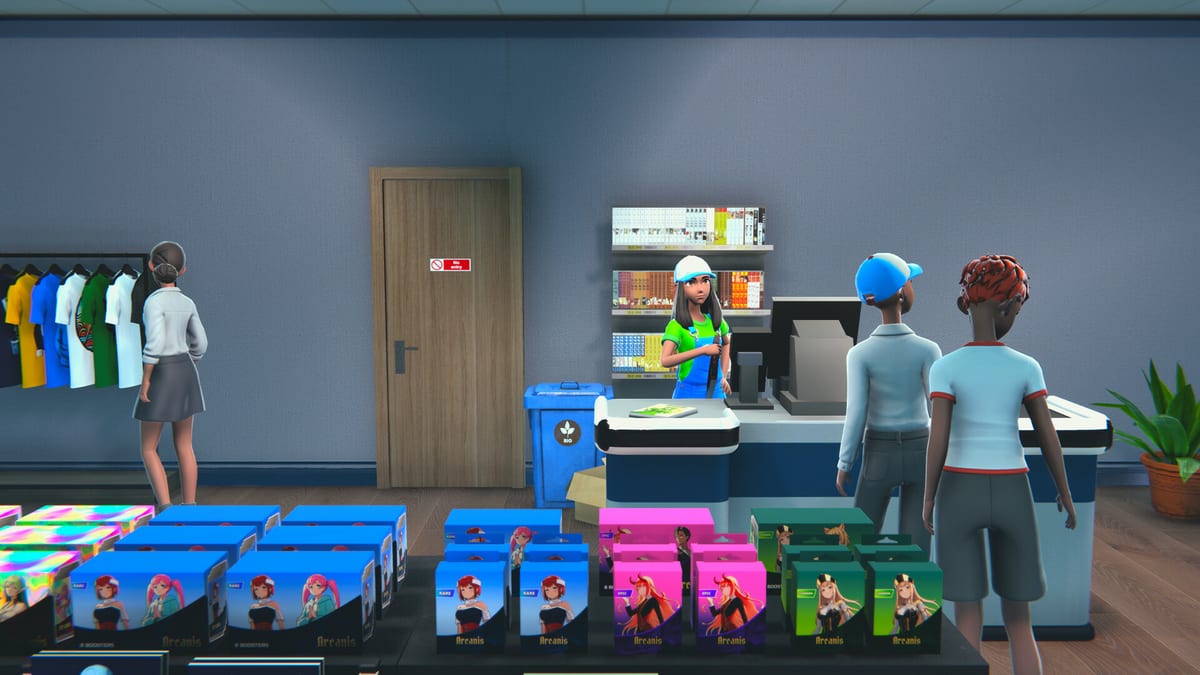
Most demo traffic is a stream of generic shoppers. Special clients are the visitors who break that stream: they ask for something awkward, they spend like a whale, they fail an age gate, or they make the shop less safe. One More Time has been explicit that unique customers and situations are part of the full game, and an August 2026 news note warned that not every guest will be on their best behavior while you and your friends stock shelves. This page is the operator manual for those moments. The full Windows build is still upcoming on 11 September 2026; treat demo coverage as a subset and launch talk as a checklist, not as a finished script.
Read this beside co-op roles (who pauses the till for a check) and customer types (where age-restricted buyers sit in the S-F list). Parent hub: Players Hub.
What counts as a special client
Use a practical definition. A special client is anyone who needs a rule, not just a scan:
- A buyer of dakimakura or other mature merch who should show ID.
- A collector who wants a complete run or a held figure and will leave if you shrug.
- An event guest who arrived for a signing or tournament and expects a lane, not a scavenger hunt.
- A problem visitor: theft-adjacent behavior, queue rage, or a guest who treats the shop like a club after closing the till.
- A VIP-shaped regular who spends if you remember the last SKU they missed.
The demo will not always label these people with a quest marker. You recognize them by the SKU in their hands and by whether the interaction takes more than a beep. If you only practice generic scans, launch-day unique clients will feel unfair. They are not; they are the service layer the store page promised when it talked about balancing customer satisfaction and money.
ID checks without drama
Age-restricted merch is how an anime shop gets real. Dakimakura, certain figures, and any SKU the game treats as mature should not be a silent scan next to a children’s volume. The check is a pause:
- See the SKU, not just the basket total.
- Stop the transaction.
- Verify the ID the game asks for (follow the on-screen prompt; do not invent a document the UI never shows).
- Complete or refuse. Do not “just this once.”
- Return to the queue. Announce the delay in co-op so nobody starts a duel on the till.
Layout makes this possible. Put mature stock in a staffed bay, not in the door sightline and not in a back corner you cannot see. Shop layout is the physical half of the ID policy. Product rankings already park dakimakura in C for early shops because the friction is the point: high ticket, high service load.
If two co-op partners both try to wave the same customer, you will double-scan or skip the check. Bind ID work to the register role. Floor staff can flag a pillow in someone’s arms; they should not complete the sale from across the room.
Service challenges the demo already trains
Even without a named VIP, the demo trains the muscles special clients will use:
- Queue pressure. Checkout audio and pace have been a common demo complaint. A slow till plus a special request is how lines wrap into the door. Keep the numpad path from controls in muscle memory so the pause for ID is the only extra beat.
- Task sync in co-op. A patch synchronized in-game tasks across players so one person is not stuck on a goal the others already finished. If a special-client task appears, make sure the crew knows who owns it.
- Subset of features. Playtest and demo messaging said you are looking at a slice. Missing dialogue does not mean the check is optional. Practice the pause anyway.
- Misbehavior. Steam news on 14 August 2026 (“Your Shop is in Danger”) previewed launch-facing threats: customers who litter next to manga, thieves who snatch displays (catch them — the studio mentioned a bat), and evening vandals who graffiti walls. Co-op can split defense. Full write-up: shop in danger. If a visitor is acting off, do not ignore them to open packs. Staff the floor.
File bugs with repro steps on Discord if a check UI fails; do not assume the studio wants you to skip it. Demo notes track the patches that already reworked server creation and architecture.
Events as special-client factories
Autograph signings and TCG tournaments, listed on Steam, manufacture special clients on a timer. A signer creates a queue of event fans who still need regular merch. A tournament table creates PvP players who still need a cashier. If you treat the event as the whole shop, browsers bounce and collectors cannot see figures.
Prep from events:
- A lane that does not block the till.
- Closed packs near the table, not in a back stockpile.
- One person on events/finance watching cash so a signing does not coincide with a zero-balance restock.
- A posted (even mental) rule: ID checks still happen during festivals.
Event days temporarily promote apparel and pins on the product list. They also temporarily promote problem behavior. Staff like it is a busier shop, not a different game.
Co-op calls when a special client spawns
Use short calls. “ID on till.” “Collector on figures.” “Lane for signing.” “Stay on register.” The co-op guide is the movement half; this page is the judgment half. Solo players should never start a long restock with a pillow customer already in the bay — finish or refuse the check first.
A missed ID check costs more than a slow restock, and it is the one mistake a patch cannot undo for you mid-sale.
Frequently Asked Questions
Quick answers for demo players and launch-day shopkeepers.
Does the demo already spawn unique special clients?
The demo is a subset. Unique customers are part of the launch pitch. Use generic shoppers to practice queue and ID habits before 11 September 2026.
Which products trigger ID checks?
Treat dakimakura and any mature-tagged merch as gated. Follow the in-game prompt. See product rankings for why pillows are high-friction stock.
Who should handle the ID pause in co-op?
The register role. Floor staff can flag the SKU. Read co-op roles so two people do not wave the same guest.
Are problem visitors confirmed?
Studio news has warned that not every guest behaves. Exact theft or penalty rules may still expand. Staff the floor and watch updates.
How do events change special-client load?
Signings and tournaments multiply queues. Prep lanes with the events guide and keep ID checks on during the festival.
Where do these visitors sit on the tier list?
Age-restricted buyers and event fans are A-tier on customer types. Collectors are S. This page is the procedure, not the letter.