
Anime Shop Simulator pricing
A shop-floor method for tags, packs, and event days — not a fake spreadsheet.
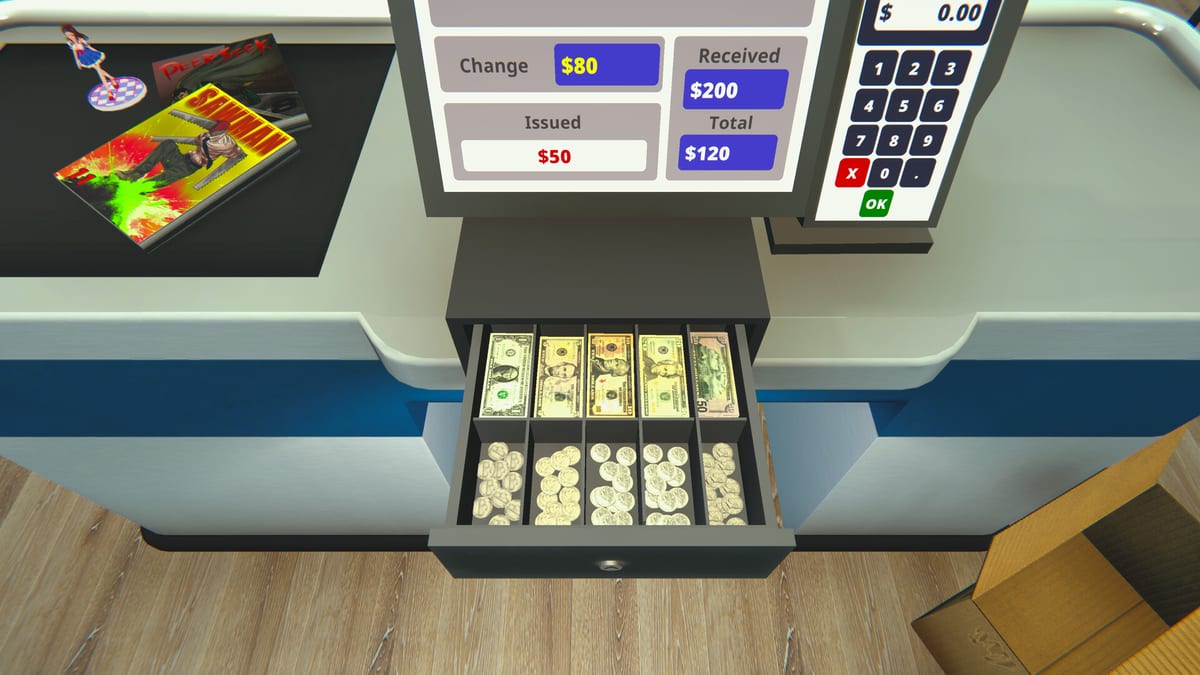
Pricing in Anime Shop Simulator is a habit, not a formula you scrape from a trailer. The demo does not publish a global margin table, and the full game is still upcoming on 11 September 2026. This playbook is what playtests and demo recordings actually support: start close to the suggested tag, watch whether the facing dies or gathers dust, move in small increments, and never let a “smart” markup spend your reorder money.
If you have not stocked a single aisle yet, read getting started first. A perfect tag on an empty bay is still zero.
The default is information
The computer and stock panel suggest a price for a reason. That number is the game telling you what a typical guest will tolerate today. Your first shift should sell at or near default long enough to see which SKUs are the engine. Manga volumes that vanish at default are your backbone. Boosters that sit at default are not a “raise the tag” problem; they are a “wrong facing or wrong license” problem.
A Japanese beginner write-up for this title makes the same point in different words: do not yank prices until you have watched sell-through. We agree. Big opening markups create a quiet shop that you will misread as “the demo has no customers.”
Small increments, then stop
When a SKU restocks from profit, you may test a bump. Round to a clean number so checkout is fast — the numpad thanks you, and so does the friend on co-op calling totals. Move one step, then watch a handful of tickets. If guests still grab it, you can try another step later. If they walk, revert. Do not “correct” a miss with a panic discount that trains people to wait.
Playtesters have reported shops that felt like guests refused anything above a tiny markup. Treat that as a warning about greed in the current build, not a law of 1.0. The product tier list is about what to stock; this page is about what to charge once it is on the shelf.
Packs versus singles
Sealed boosters are a product. Opened cards are a different product. If you crack a box, you have converted wholesale potential into a lottery. Price sealed packs so they still look like a treat. Price singles based on whether you actually have a buyer — collectors and event players from the customer tier list — not based on how shiny the foil is in your hand.
A practical split:
- Keep a sealed facing at a tag that turns.
- Open a sample to learn the set and to seed a display.
- Duplicate foils can sit in a display case at a premium if someone is looking at them. If they are not, they are wallpaper. See TCG cards.
Never empty the last sealed box “to hit a rare” when the facing is already a hole. That is unboxing as a hobby, not as a shop.
Event-day tags
Signings and tournaments, covered in events, raise willingness to pay for matching merch and for impulse packs on the queue. They do not raise willingness to pay for a random dusty volume at the back. Bump the event SKUs a step. Leave the rest of the store alone. When the guest leaves, revert the bump unless sell-through stayed hot the next morning.
Gouging a signing line is how you turn a popularity tool into a one-star memory. The demo’s special clients and ID checks already slow the till; do not add arguments about a doubled poster.
The cash buffer is part of the price
A tag that looks clever on the computer is a bad tag if it leaves you unable to reorder. Shipping sits on top of product cost in this genre. A booster carton plus freight can wipe a beginner till. Hold enough cash for one restock of your engine SKU. If a price test would drop you below that line, skip the test.
The tools hub opening checklist repeats this on purpose. Pricing and cash are the same muscle.
Co-op: one person owns the computer
Four people changing tags at once is how you get a manga wall with five different numbers. Assign computer / prices to one role — usually the host or the finance seat on co-op roles. Everyone else calls out “this facing is dead” or “this pack is evaporating.” The computer person moves one SKU at a time.
After launch
When 1.0 ships, this playbook should gain real examples (default, +1 step, event step) once the community has a stable patch. Until Steam news or a long demo session publishes durable numbers, we will not invent them. Methods survive patches. Fake spreadsheets do not.
Use demo notes if a patch clearly retunes guests. Use release date so you do not build a 2025 spreadsheet for a 2026 economy.
Frequently Asked Questions
Quick answers for demo players and launch-day shopkeepers.
Should I raise prices on day one?
No. Sell near default until you know which SKUs turn. Then bump in small steps. See also getting started.
How do I price booster packs?
Keep a sealed facing that sells. Open samples for the collection. Do not crack the last box to “pay rent.” Details in TCG cards.
Can I gouge during a signing?
A small bump on matching merch is reasonable. A doubled store is how the queue leaves. Events covers the rest.
Why isn't there a calculator on this page?
Because demo margins are not a public API. A wrong calculator is worse than a method. This pricing playbook is the method.
Who should change prices in co-op?
One person. Assign it on the co-op roles sheet so the wall does not get five tags.