
Anime Shop Simulator Four jobs, one shop
Register, restock, floor/display, and events/finance — name them before you open.
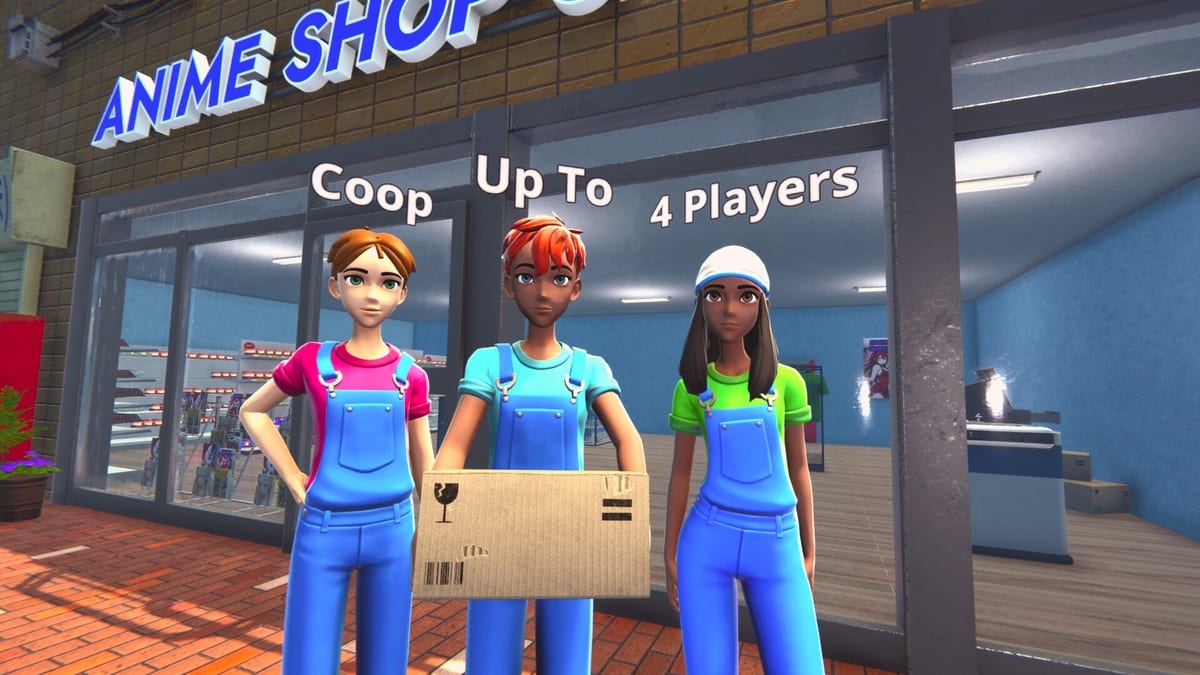
Anime Shop Simulator supports online co-op for up to four players. That is the headline on Steam and it is true in the demo that has been playable since 19 February 2026. It is also the fastest way to bankrupt a boutique, because four people will default to the fun jobs: cracking packs, dueling, and spinning the wallpaper. This page assigns four roles that cover the actual work. Movement, lobby, and hosting sit in the co-op guide. Visitor judgment sits in special clients. Parent hub: Players Hub.
Name the roles before the first customer. A late assignment is how you get three people in the stockroom and a silent till. Rotate every in-game stretch if you want, but rotate on purpose.
Register
The cashier is the only non-negotiable role. Someone’s eyes stay on the till, the numpad, and the ID pause. Demo players already like that the numpad works and that you can hold-scan multiple items; they also complain about checkout audio. Neither fact changes the staffing rule. If the register is empty, the rest of the shop is a museum.
Register owns:
- Scanning and change.
- ID checks on mature SKUs (dakimakura and anything the UI gates).
- Calling “queue long” so restock drops a crate and comes to bag.
- Refusing to duel until coverage exists.
In two-player sessions, register is still a named job even if you swap every few minutes. In four-player sessions, do not “all jump on till” either — colliding scans waste the advantage of extra hands. Controls are this role’s textbook.
Restock
Restock lives between the delivery point and the holes on the wall. Manga is S-tier on the product rankings because it turns; it only turns if someone refills it. Restock owns licenses that unlock the SKU you already sell, not a vanity series for the back room.
Restock owns:
- Ordering against sold holes, not wishlist vibes.
- Breaking pallets without blocking the door.
- A closed-pack budget versus a crack budget (A-tier TCG discipline).
- Saying “out of X” before the collector leaves.
If restock also wants to open boosters, set a number. “Two boxes for the binder, the rest face the customer.” Unbounded cracking is how co-op shops go broke while everyone cheers a holographic.
Floor / display
Floor is the first-person job: facings, sightlines, trash, and making figures readable from the door. Custom wallpaper and a shop name are in the Steam customization blurb; they do not replace facing a sculpt. Floor also watches shop layout live — moving a rack that chokes the queue is more valuable than another poster.
Floor owns:
- Figure facing and empty space in the case.
- Till-zone pins and keychains (C-tier impulse).
- Mature bays that remain visible to staff for ID flags.
- Pulling browsers out of a choke point so collectors can pass.
Floor is the best role for a player who likes to wander. Give them a radio rule: if register calls queue, they bag or they restock, they do not start a new decoration project.
Events / finance
The fourth role is easy to skip in the demo subset and expensive to skip at launch. Steam lists autograph signings and TCG tournaments as customer magnets. Someone has to decide when those happen relative to cash. Events/finance owns the calendar and the buffer.
Events/finance owns:
- Whether you can afford a signing today.
- Tournament table placement that does not kill the till lane (events).
- Price nudges using the pricing playbook — small steps, never panic discounts.
- License purchases that restock sells, not vanity.
- A cash floor: if the register cannot survive a dead box, you do not host a festival.
In a two-player crew, fold this role into register during quiet minutes. In four-player, it is how you stop three people from buying furniture while the manga wall is empty.
Suggested squad sizes
- Solo: You are register first. Restock between customers. Floor only when the queue is zero. Events wait.
- Duo: Register + restock. Floor in the gaps. Events/finance is a shared two-minute talk before you open.
- Trio: Register, restock, floor. Events/finance rides on register.
- Four: All four roles named. PvP is a break activity for whoever is not on till, not a fifth job that eats the other four.
PvP TCG is a real Steam feature and a real customer type. It is also how roles collapse. If your friends came to duel, schedule a match after a restock cycle, or play with three on staff and one on the table.
Lobby and patch reality
You cannot assign roles if you cannot create a server. The studio reworked server-creation logic after demo reports that create/join sometimes failed. Later demo notes synchronized tasks so objectives complete for everyone at once. If your squad is stuck in menus, read demo notes before you blame each other. Host from the player with the steadiest machine; system specs are modest (8 GB RAM, GTX 960 class) but a stuttering host still ruins scans.
Call the rotation before the first customer, not after the queue forms — that one sentence is the whole co-op skill.
Frequently Asked Questions
Quick answers for demo players and launch-day shopkeepers.
Is co-op local split-screen?
No. It is online co-op, up to four. Setup details are on the co-op guide.
What is the one role we cannot skip?
Register. Every other job can pause. The till cannot. Bind ID checks to this role.
Can we all play the TCG?
Not all at once if you still want a shop. Treat PvP as a break. Packs and rules are on TCG cards.
Who should order product?
Restock proposes, events/finance confirms against the cash buffer. Use product rankings so vanity crates lose.
Does the demo include all four jobs?
The loop is there: till, shelves, layout, prices. Fuller events arrive with the complete game. Practice the split now.
Where do we go if the lobby fails?
Check demo notes for server-creation fixes, then retry. Role talk still happens in Discord while you wait.