
Anime Shop Simulator TCG Cards
Boosters, unboxing, keep-versus-sell, pin and keychain rarities, collection displays, and the PvP minigame.
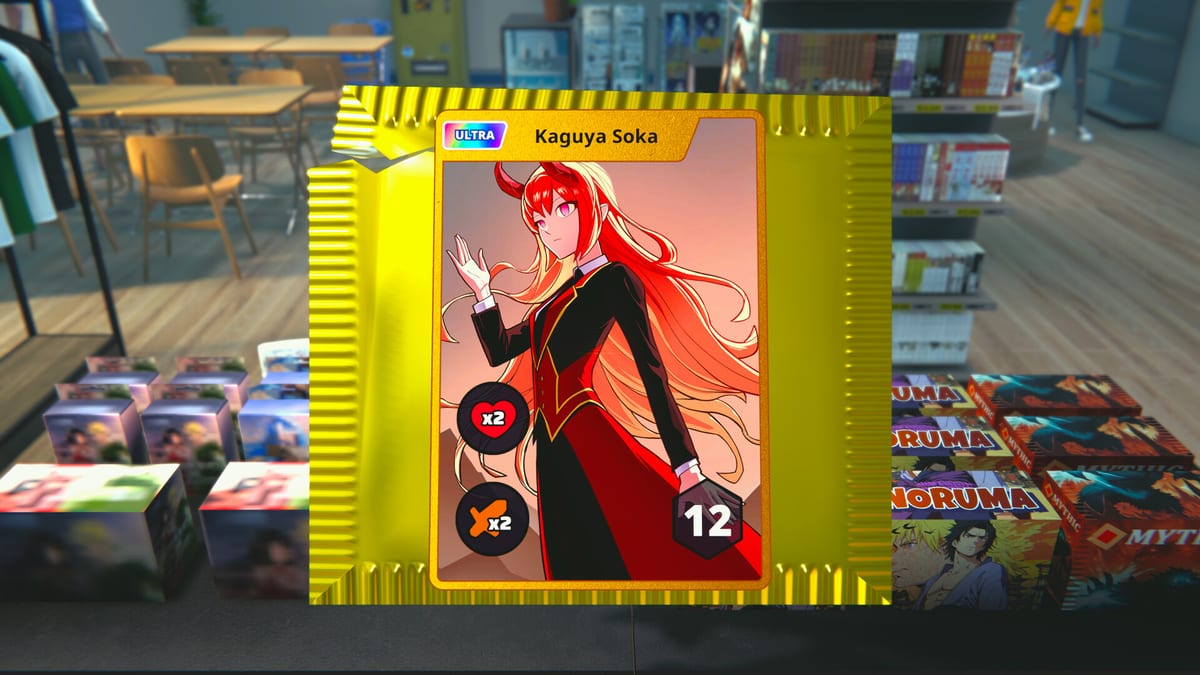
Collectible cards are the loudest subsystem in Anime Shop Simulator. You can sell sealed boosters, rip them in the back, keep or sell singles, pin the pretty ones to a display, and then duel a friend in the PvP TCG minigame. Pins and toy keychains ride the same rarity ladder — common through ultra rare — and they exist so the shop is not only paper in plastic. All of it uses fictional anime IPs, not real licensed sets, which is why you should not hunt a card named after a show you already watch.
This page is the card-shop-inside-the-anime-shop. For the physical bay those boxes sit on, use shop layout. For the first-hour cash rules that stop you from ripping the rent, use Getting Started.
Ordering boosters and boxes
Licenses gate sets. In the demo you will not see the full catalog; playtests unlocked a short list and left the rest for 1.0. Buy the card license only when manga (or whatever your door run is) already restocks from profit. A booster carton in recordings sat around the mid-hundreds plus shipping — enough to brick a new save if you still owe the next manga reorder.
Order in this spirit:
- Sealed for the floor first. If you cannot fill a facing with closed packs, you do not have a card shop; you have a hobby desk.
- Boxes over random singles when the unit math is better, but only if you will actually stock the extras. A case you cannot display is a cardboard tax in the stockroom.
- One set deep, not five sets shallow, until you know which fictional IP your customers actually grab.
- Leave a cash buffer. Cards are a spike product. You still need manga money after a dead rip.
Check the products tier list once we have stable demo data on which SKUs move. Until then, let sell-through — not trailer glamour — pick the second set.
Unboxing without starving the floor
Ripping packs is the trailer shot. It is also how shops go empty. A workable rule: never open the last sealed facing of a SKU. Pull packs from overflow in the stockroom. Trash the wrapper like any other carton so the controls path stays clear.
Unbox in lulls, not during a queue. In co-op, appoint a ripper who is not the cashier. Four people cracking packs at the counter is a party, not a store.
What you are looking for:
- Playable cards for the minigame / collection binder.
- Showcase singles that deserve a case more than they deserve a quick sale.
- Bulk that should go into a cheap singles box rather than back into a sealed slot.
If the demo lets you price singles individually, do it after you have seen two or three of that rarity sell — the same sell-through before hikes rule as manga, except greed is louder because holographic brains are stupid. Use pricing as a sanity check.
Keep versus sell
Every rare is a fork:
Sell when the till needs a reorder buffer, when you already have a copy in the display, or when the card is a duplicate that does not change your duel deck. A holographic that sits in inventory while the manga bay is air is a vanity bankruptcy.
Keep when it completes a visible set, when you are building a deck for the PvP table, or when the display itself is part of how the shop feels. The design pitch is explicit: put the collection on display and show off to friends. That only works if guests can walk up to it. A binder in a menu is not a window.
A middle path: keep the first, sell the second. First copy is identity. Second copy is payroll. Ultra rares can break that rule if the cash crisis is real — pay the distributor, then hunt another copy later.
Do not treat demo values as 1.0 values. Markup tolerance looked tight in at least one demo review. If customers bounce, drop the single and sell sealed until traffic returns.
Pins, keychains, and rarity
Studio feature copy groups cards, pins, and toy keychains on one collect-them-all ladder: common → uncommon → rare → ultra rare (wording may vary in UI). These small goods are layout gold because they fill impulse space the queue can see. They are also easy to over-order because they look cheap as a line item and then eat a license plus a fixture.
Stock them like candy, not like statues:
- Shallow displays, restocked often.
- Mix of common hooks so the bay is never a graveyard of one ultra SKU.
- A single “crown” ultra in a locked or highlighted spot if the game gives you one.
If a pin line shares a license with a card set, buy it as an add-on to a set you already sell, not as a third IP you cannot explain to a guest in a hurry.
Display collections
Displays are not storage. Storage is the stockroom. A good display:
- Sits off the restock alley but on the browse path.
- Shows a complete thought (one fictional series, one rarity stair, one color story).
- Can be updated without tearing down the manga run.
- Is readable in first person from two meters, because that is how customers and co-op partners see it.
Rotate. A fossilized wall of your first night’s luck teaches guests nothing. When events land, a display can double as a tournament backdrop — see events — but do not block the table with acrylic.
PvP TCG minigame
Co-op copy is blunt: manage the shop together or play a TCG mini game versus each other. That duel is downtime content, not a replacement for the till.
House rules that keep the shop alive:
- Duel between customers, not during a line of three.
- One player remains floor-aware even in a match — pause or concede if the queue beeps.
- Build decks from kept cards, not from ripping the last sealed box “for one more rare.”
- Put the table in the flex rectangle from shop layout, never in the inbound lane.
The demo is a slice of the duel rules. Do not write a competitive tier list off a handful of playtest games. Learn enough to have fun and to know which singles are actually playable before you refuse to sell them.
At launch, tournaments will plug this minigame into popularity. Until 11 September 2026, treat PvP as a co-op toy that happens to share SKUs with your revenue. If the loop is why you are wishlisting, say so in your own notes after the review — just do not let it empty the shop you are supposed to be running.
Frequently Asked Questions
Quick answers for demo players and launch-day shopkeepers.
Should I sell booster packs sealed or open them?
Keep a sealed facing on the floor at all times. Open overflow only. Selling air because you ripped the last box stalls the shop. Getting Started puts this in the first-hour budget.
When do I keep a rare instead of selling it?
Keep the first copy for display or for a duel deck. Sell duplicates unless you are days away from a complete showcase and the till is already healthy.
Are the cards real anime licenses?
No. Sets, pins, and keychains use fictional IPs. Chase in-game rarities, not names from shows you watch outside the sim.
How does the PvP TCG minigame fit into a shift?
It is a between-rush duel for co-op partners, not a reason to abandon the register. Park the table off the queue and keep one player floor-aware. See co-op.
Where should pins and keychains sit?
On shallow impulse fixtures near the line, not on deep manga shelves. They share the common-to-ultra-rare hunt with cards but they sell with the eyes, not the binder.
Do TCG tournaments work the same in the demo as at launch?
Do not assume it. Tournaments are a pitched 1.0 / event-layer feature. Demo access varies by patch. Track that on events and demo notes.